Artificial Intelligence is changing how organisations engage with customers and drive revenue. But getting internal approval for a new AI initiative usually depends on showing clear business value. An
Agentforce Proof of Concept (POC) offers a low-risk, time-bound way to demonstrate measurable results using your organisation's own data. This guide sets out a practical framework to help business and technology leaders secure approval and align stakeholders.
10 Steps to Secure Internal Approval
Start by framing the initiative around a specific business challenge rather than the technology itself. Internal approvals are more likely when the focus is on tangible outcomes.
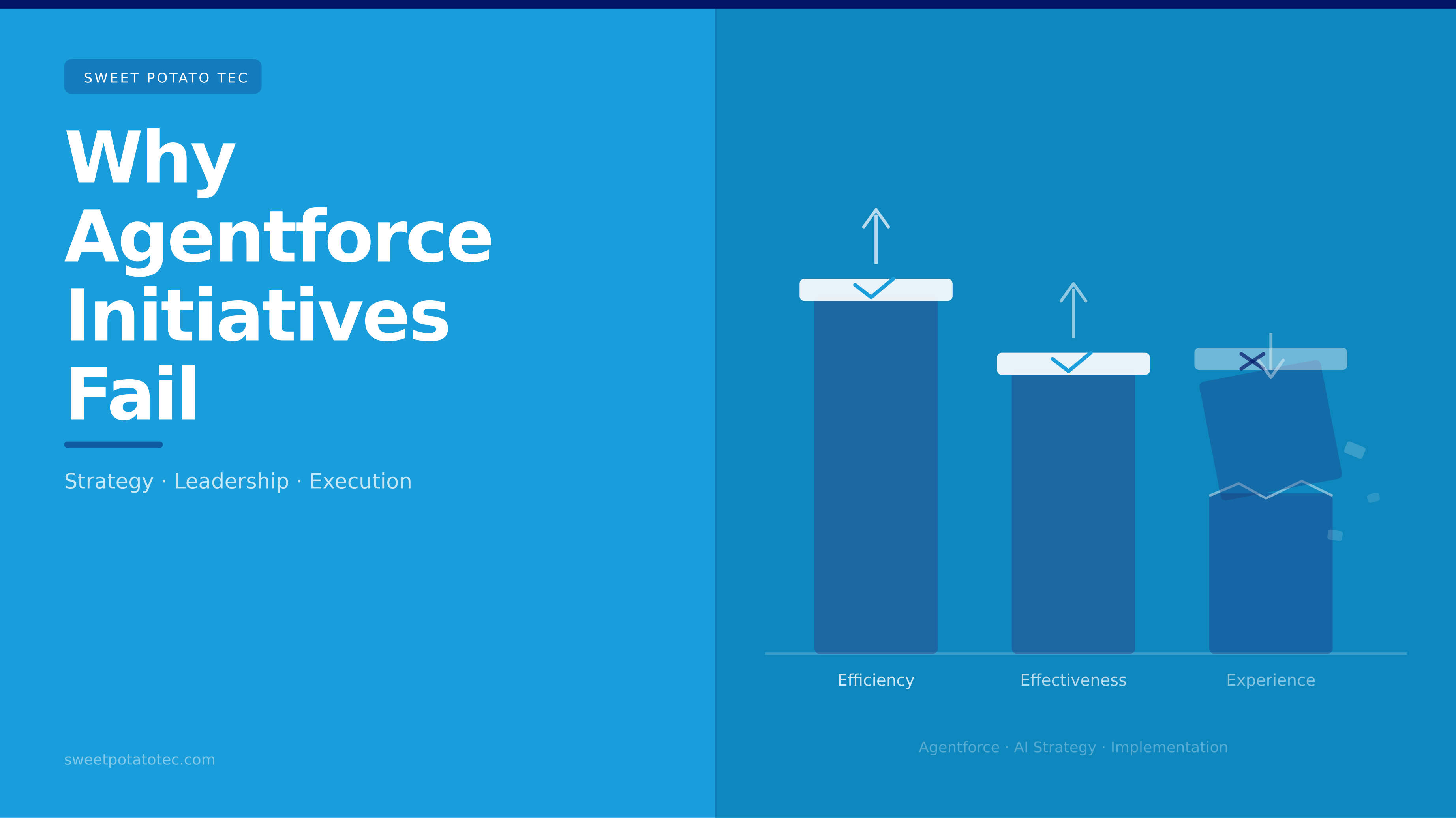
Common high-impact use cases include lead nurturing to re-engage dormant leads, a sales assistant to reduce repetitive admin, sales coaching to improve deal progression, and customer service automation for high-volume Tier 1 enquiries. Align the use case with one of three objectives: efficiency, effectiveness, or experience.
Executive sponsorship is important if you want approval and proper organisational alignment. Suitable sponsors often include the Chief Revenue Officer for pipeline growth, the Chief Operating Officer for operational efficiency, the Chief Information Officer or CTO for technology alignment, or the Chief Marketing Officer for customer engagement.
Position the POC as a business initiative with measurable outcomes, not as an IT experiment.
A clear value proposition helps stakeholders understand why the initiative matters. A simple way to frame it is: "If we can achieve measurable results in six weeks, imagine the impact over a year."
Emphasise the low-risk nature of the POC, the ability to demonstrate measurable ROI, the speed to value, the potential to scale later, and the advantage of moving early.
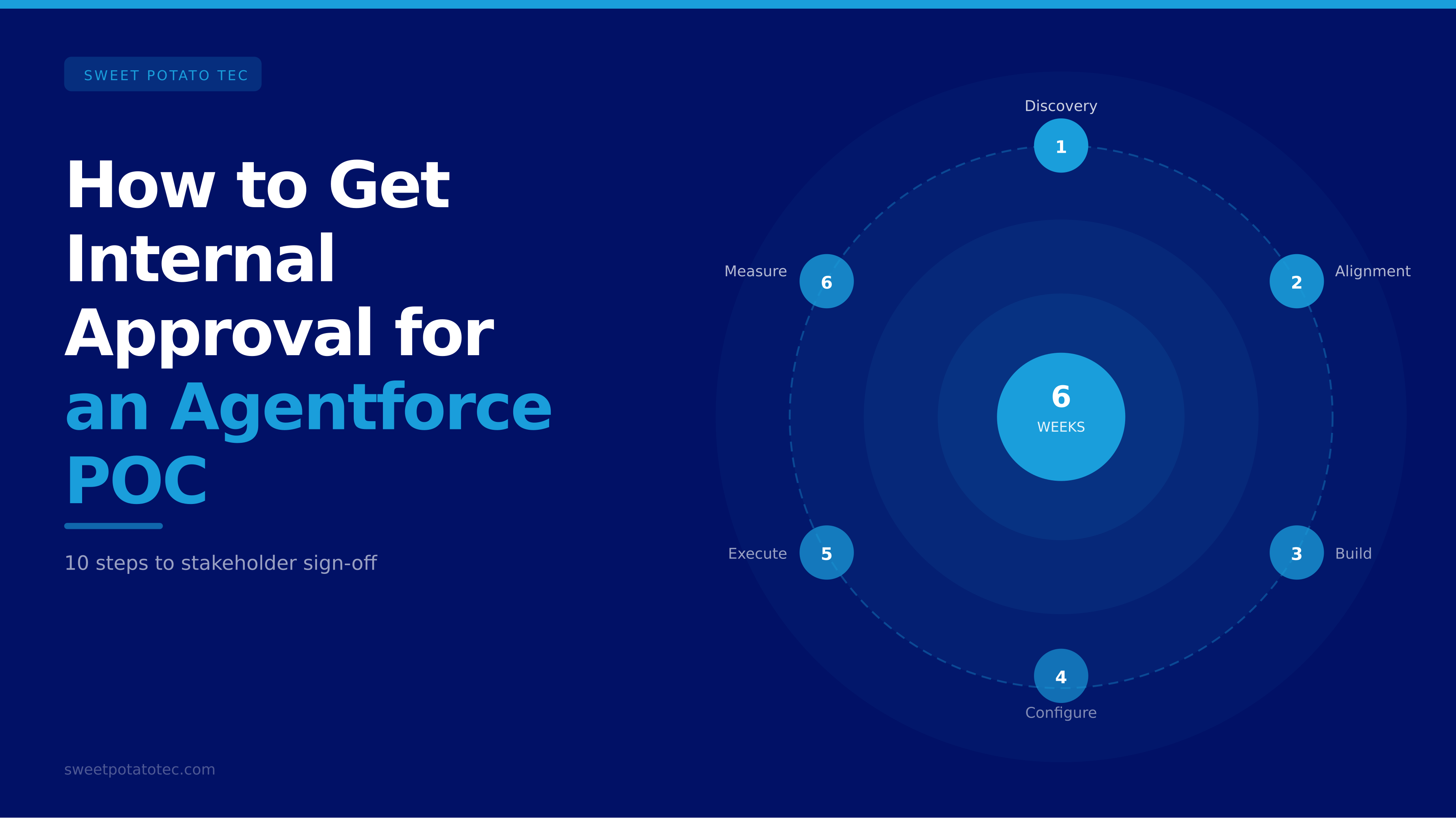
Decision-makers are more likely to approve something with a clearly defined scope and a predictable timeline. A typical Agentforce POC runs for around six weeks:
Weeks 1–2: Discovery and alignment
Weeks 2–3: Build and configuration
Weeks 3–6: Execution, measurement and evaluation
Keeping the POC focused on one high-impact use case helps maintain clarity.
Clearly defined KPIs give decision-makers the evidence they need.
Leading indicators: Meetings booked without human involvement, leads processed or qualified, outreach messages sent, hours saved.
Lagging indicators: Opportunities created, opportunities progressed, revenue generated or influenced.
It is important to agree these success criteria before the POC begins.
Stakeholders will want confidence that the organisation is ready to run the POC properly. That includes access to relevant CRM data, availability of sales collateral such as product brochures and email templates, and support from sales, operations, and technical teams.
Technology components often required include Sales Cloud, Data Cloud, Agentforce for Sales, flex credits, and a sandbox environment.
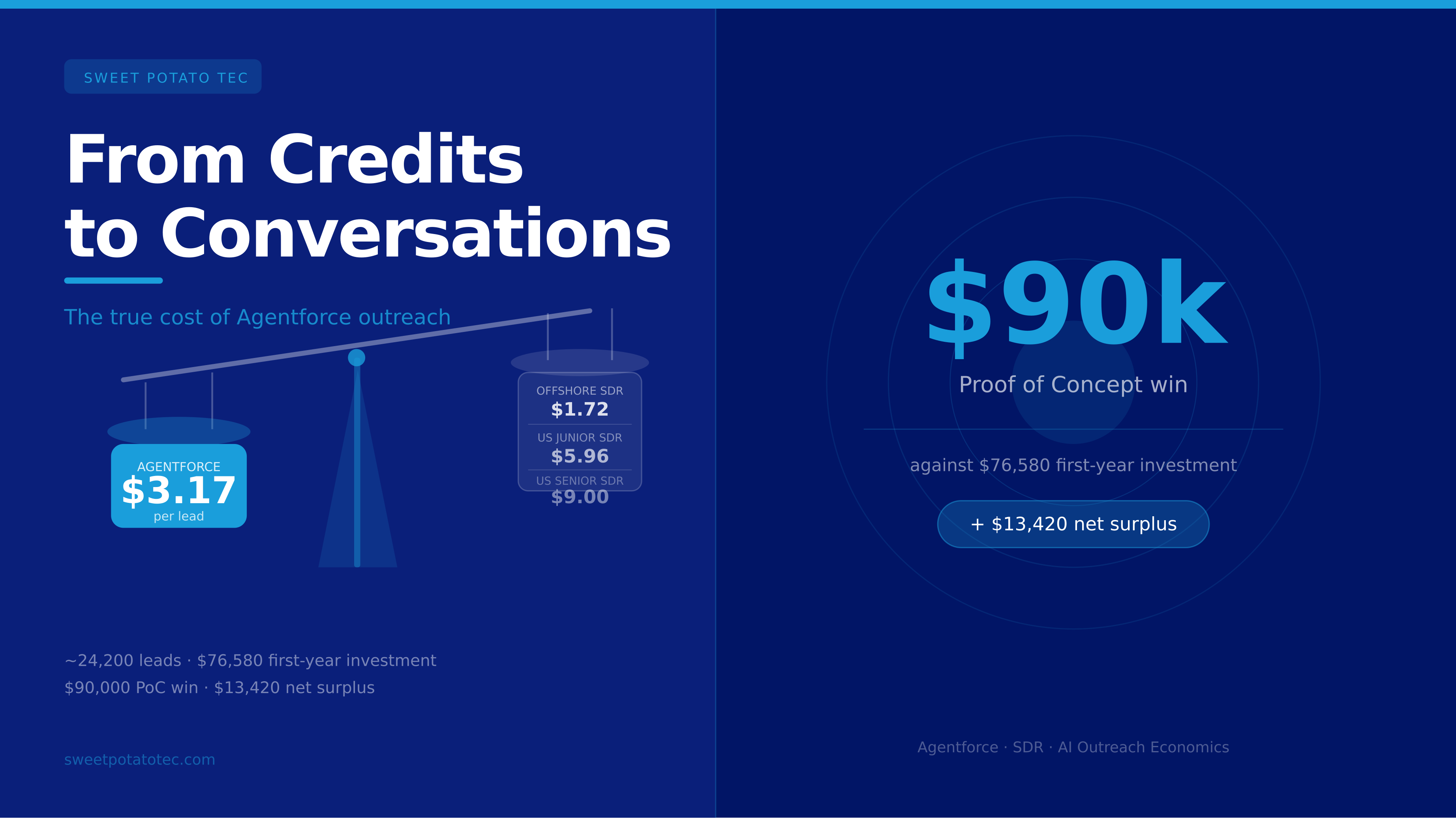
Real-world examples strengthen the business case and help build confidence. For example, an early adopter of an Agentforce outreach agent generated $90,000 in revenue during the initial deployment.
Results will vary, but examples like this help stakeholders understand the potential upside and make the opportunity more tangible.
Internal approval often depends on showing that the risks are understood and managed. Make it clear that the POC is controlled and time-bound, with executive oversight, defined success criteria, and alignment to broader business and technology priorities.
Position it as a way to prove value before increasing investment.
To run the POC, organisations will usually need temporary access to specific technology components and a modest implementation budget. These may include evaluation or courtesy licences for Sales Cloud, Data Cloud, Agentforce for Sales, flex credits, and a Full Copy Sandbox.
Being clear about the cost and the expected return helps move approval along faster.
A concise approval pack can make the decision-making process much easier. Recommended contents include:
Executive summary · Business problem and objectives · Proposed use case · Scope and timeline · Success metrics · Resource and technology requirements · Expected ROI · Governance considerations · Recommended next steps after the POC.
Example Internal Approval Statement
"We are seeking approval to initiate a six-week Agentforce Proof of Concept to evaluate the impact of an AI-powered sales agent using our own data. The objective is to demonstrate measurable improvements in revenue productivity and operational efficiency before committing to a broader investment."
Benefits of an Agentforce POC
Low-risk validation
Test real value before committing to a broader investment.
Measurable ROI
Defined KPIs give decision-makers the evidence they need.
Evidence-based decisions
Supports executive confidence through data, not assumptions.
Groundwork for scale
Lays the foundation for wider AI adoption across the business.
Early mover advantage
Move ahead of competitors still evaluating from the sidelines.
One-Page Approval Checklist
0 of 9 complete
A clearly defined business problem
Identification of an executive sponsor
Selection of a high-impact use case
A six-week timeline defined
Agreed KPIs and success criteria
Confirmed data and resource availability
Defined technology requirements
Supporting ROI evidence gathered
Governance considerations addressed
A well-structured Agentforce Proof of Concept gives organisations a low-risk way to test measurable business value within six weeks — and make a more informed decision about AI investment.